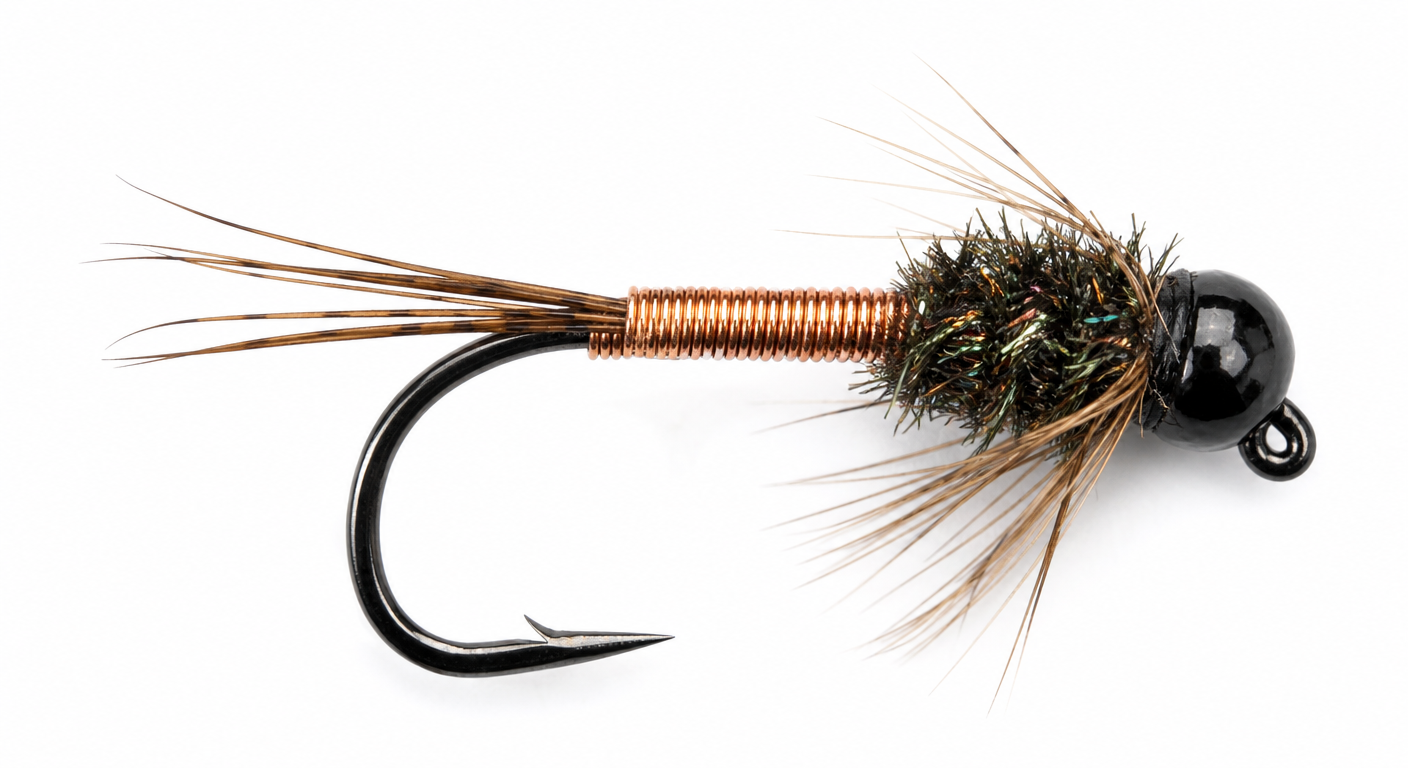
Brassie
Imitates: Midge pupa, caddis larva
Quick Reference
- Best Sizes
- #16-22
- Best Season
- Year-round, peak winter & early spring
- Best Conditions
- Tailwaters, clear cold water, slow seams and tailouts
- Water Temp
- Below 50°F
- Recommended Tippet
- 6X fluorocarbon
How to Rig It
Drop 18–24" below an indicator or trail it behind a heavier nymph.
How to Present It
Dead-drift through deep slow water. The copper body cuts current and sinks fast for its size.
Why It Works
Three materials — copper wire, peacock herl, thread — make a slim, heavy, flashy profile that imitates a midge pupa or caddis larva better than most complicated patterns.
History
Tied in Colorado in the 1960s by Gene Lynch, the Brassie became famous on the South Platte and is now a staple in every Western tailwater box.
Pro Tip
Carry copper, red, and chartreuse wire versions. Switch colors before switching sizes when fish refuse it.
Frequently Asked Questions
What size Brassie is best?+
Size #18-20 covers 90% of midge water. Drop to #22 in winter tailwaters.
Is a Brassie a midge or caddis?+
Both. Tied small it imitates a midge pupa; tied larger (#14-16) with peacock it passes for a caddis larva.
Not sure if Brassie is right today?
Get a fly recommendation based on live water temp, flow, sky, and time of day for any river in the US.
Open Fly Advisor Map
Map Fly Guide